How to use a simple visual template to make English meetings easier
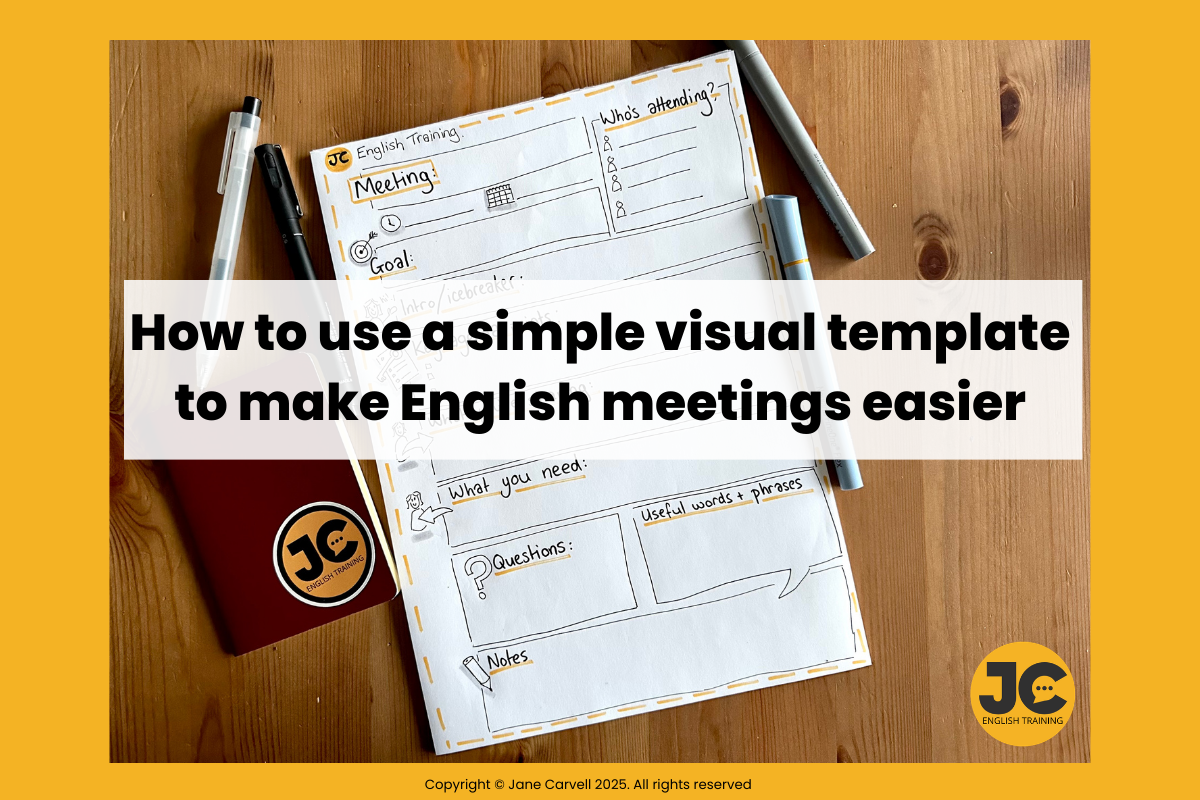
A visual framework to make preparing for a meeting in English quicker, easier and clearer.
A productive English‑speaking meeting doesn’t just happen by chance. Clear, confident communication requires preparation, especially when you’re speaking under time pressure or in your second language. A simple visual meeting preparation tool can make this easier. I use a sketchnote‑style one‑pager with my clients to help them organise their thoughts and feel ready for a meeting in English. It turns preparation into a quick, structured routine that supports both clearer communication and stronger participation.
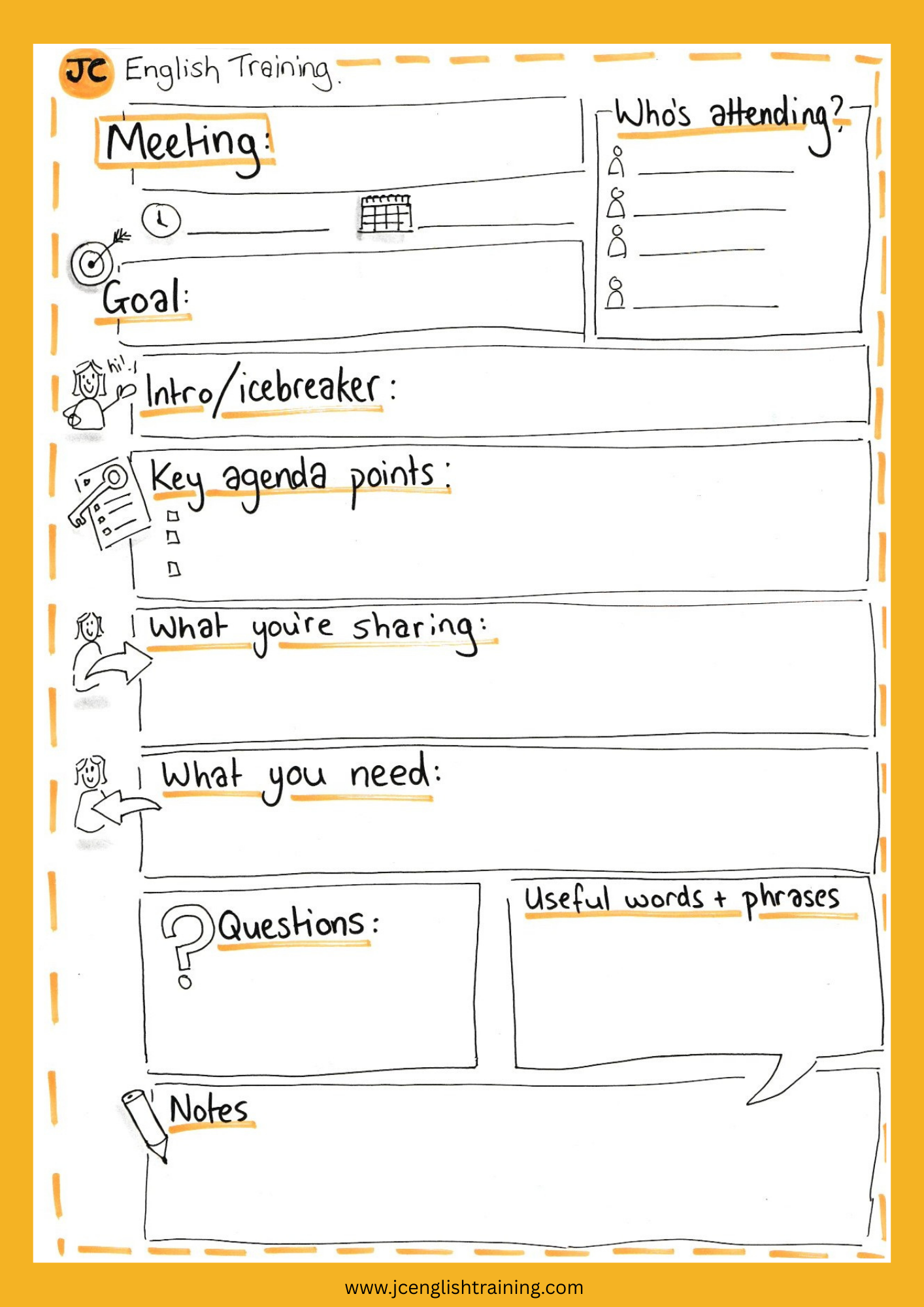
I recommend sketching your own template using my example as a model — great for using the cognitive benefits of sketchnoting and adapting the framework for your specific needs.
Meeting
At the top of the page, there’s space for the meeting title or type. Naming the meeting sets the frame and gives you a clear starting point for your preparation.
Goal
Next to that is your personal goal for attending. This is different from the official agenda. Your goal might be to get approval for a proposal, ask for clarification, give a progress update, or influence a decision. When you define this in advance, you’re more likely to speak up at the right moment and shape the discussion in a meaningful way. It shifts your mindset from passive listener to active contributor.
Who’s attending?
Another section focuses on the people in the meeting. Writing down key participants and their roles helps you adapt your language, expectations, and communication style. You may speak differently to a client than to a technical colleague, and differently again to a senior decision‑maker. Thinking about the people in advance also makes it easier to prepare targeted phrases. For example, inviting your client’s opinion or referring to your colleague’s expertise.
Introduction or icebreaker
Because the opening moments of a meeting can feel the most stressful, the template includes space for a short self-introduction or icebreaker. This could be a professional self‑introduction, a transition into your topic, or a simple small‑talk starter. Preparing your first line boosts your fluency because you start confidently rather than searching for words.
Key agenda points
The centre of the one‑pager is dedicated to the key agenda points. Instead of copying the full agenda, you rewrite the most relevant points as your own keywords. This creates a quick visual map of the discussion and helps you stay oriented, even if the conversation moves quickly or unexpectedly.
What you’re sharing
Two especially useful sections are “what you’re sharing” and “what you need.” Before the meeting, you note what you plan to contribute: data, recommendations, updates, or leading part of the meeting. This clarity ensures that your important points are spoken about and you create the impact you want for the meeting.
What you need
Equally important is identifying what you need from the meeting: a decision, feedback, confirmation, or resources, for example. Many people overlook this step and leave the meeting without the result they hoped for. Seeing your needs written down increases the likelihood that you ask directly and clearly.
Questions
The template also includes space for prepared questions. This is one of the simplest ways to build confidence. Arriving with two or three ready questions guarantees that you have a natural entry point into the discussion. Well‑designed questions also signal engagement and professionalism. AI tools can help you generate questions based on your meeting topic. This HBR article (“When AI Gets a Board Seat”) offers more ideas for using AI to improve meetings.
Useful words and phrases
Because language support matters under pressure, the template also features a word or phrase bank. This is where you collect useful vocabulary and sentence starters. Over time, this becomes your personal language toolkit.
Notes
Finally, there’s space for notes and action points during the meeting. You can note decisions, follow‑ups, and tasks directly on the same page. Many users also write useful phrases they hear from others, turning each meeting into a mini language‑lesson.
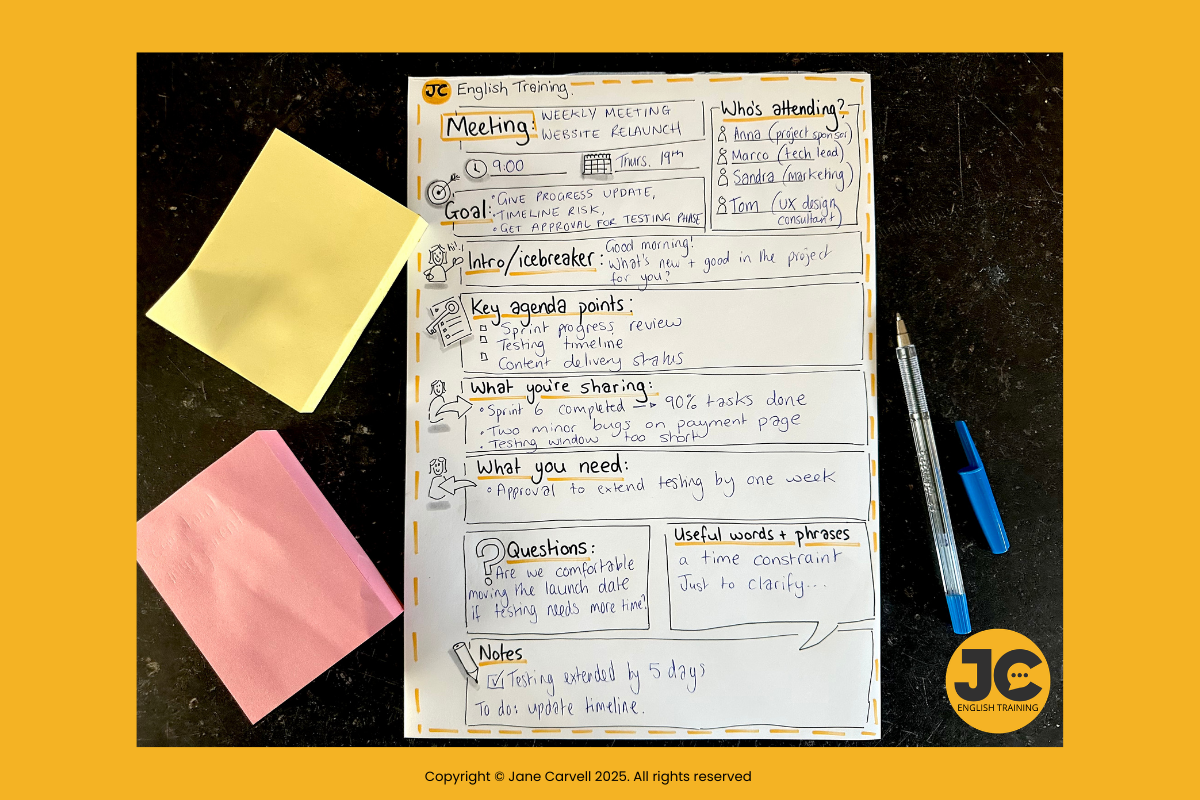
An example of how to use the visual template. But feel free to adapt it to your own needs.
The value of this visual one-pager is how simple and easy it is to use and adapt. It reduces your cognitive load, organises your thinking, and makes language preparation faster and more concrete. Instead of long notes, you get a structured overview you can scan in seconds before the meeting begins. Used regularly, it not only leads to better meetings but also builds genuine speaking confidence. This helps your English shift from a struggle into a practical professional tool.
If you’d like support using this visual meeting template in your own work, and want to build more confidence and clarity in your English meetings - let’s talk!
In a short discovery call, we’ll look at your real meeting situations, your English communication goals, and where targeted language training can make the biggest difference.
Book your discovery call below and make your next English meeting easier, calmer, and more effective.⬇️

Hello,
I’m Jane Carvell, a business English trainer, language coach and visual thinking enthusiast. I help German-speaking professionals improve their English communication skills, so that they can build better connections in an international working world.