Impactful English at work: What? So what? Now what?
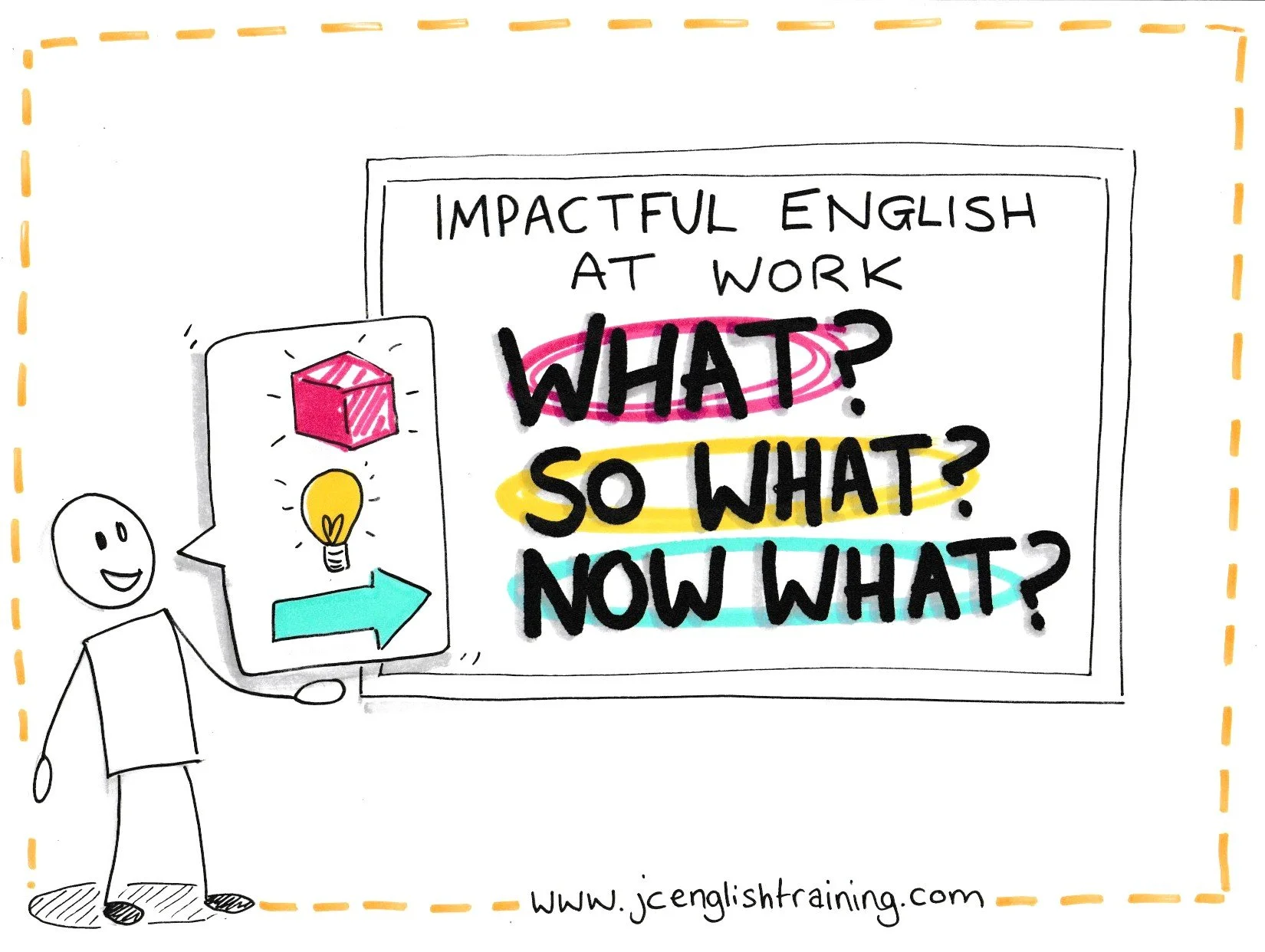
Have you ever left a meeting wondering what the main point was or what was supposed to happen next?
Someone shared a long project update, presented data or explained a problem. There was more than enough information, but the message wasn't really clear or impactful.
When you're speaking in English at work, this can be particularly challenging. You're thinking about the content and searching for the right words all while trying to organise your thoughts clearly. When you’re thinking about so many things, it's easy to get lost in the details and lose the impact of your message.
One framework I like for bringing structure to our thinking and communication is What? So what? Now what? I came across it through Matt Abrahams' book Think Faster, Talk Smarter, which explores how structure can help us communicate more effectively, especially when we're put on the spot.
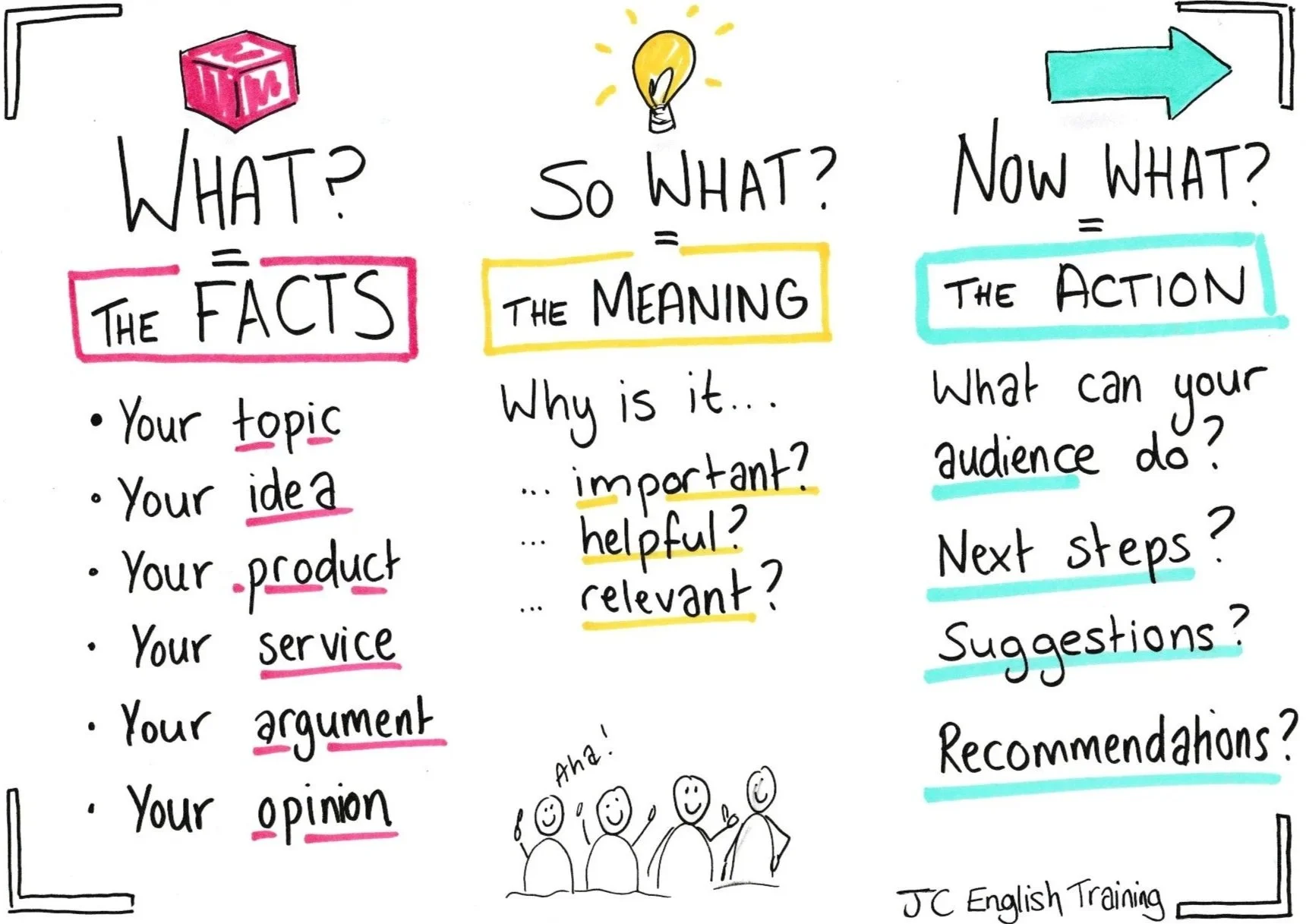
Points to talk about in each of the three parts of the framework.
Three questions for clearer communication
The idea is simple: organise your message around three questions.
WHAT? — What's happening?
Start with the facts. What have you noticed? What's changed? What have you found out? What is the data? Give your audience enough information to understand the situation without overwhelming them with details.
SO WHAT? — Why does it matter?
Explain the meaning and significance. What are the implications? Who is affected? Why should your audience care? This is where you show why your message is important for your audience.
NOW WHAT? — What happens next?
This is the forward-thinking part, when you can recommend an action or get a decision. It’s about making the next steps clear for you and your team.

Some phrases to help you get started…
From a vague update to a clearer message
Imagine you're updating your manager about a project.
Here's your first attempt:
“We've had some delays with the testing. There are still a few issues, and the team is working on them. We'll keep you updated.”
It's not wrong, but your manager is left with open questions about the delay, the impact on the project and what actions they need to take.
Let's try again…
WHAT? “We've identified three unresolved issues during testing, and the team needs another two days to fix them.”
SO WHAT? “This means we may miss Friday's deadline for user acceptance testing, which could affect the planned launch date.”
NOW WHAT? “I recommend we review the remaining issues with the IT team today and agree whether we can recover the time or need to adjust the launch plan.”
The second version gives your manager a clearer picture, explains why the situation matters and suggests a way forward.
This creates a clear, structured message and you don’t have to stress about finding complicated vocabulary or building long sentences. There will fewer tricky questions from your boss too (hopefully).
Before you speak: make it visual
One of the things I like about this framework is that you can use it to organise your thoughts before you start speaking.
As a visual thinker, I often use simple sketches, shapes and diagrams to make ideas easier to organise and understand. But don’t worry, you don’t need to be an artist to visualise what you want to say.
Draw three boxes and connect them:
WHAT? → SO WHAT? → NOW WHAT?
Before your next meeting or presentation, write down two or three keywords under each heading. This gives you a visual route through your message so instead of trying to remember a complete script, you have a structure to guide you.
It's particularly helpful when you're speaking English under pressure. You can focus on communicating your ideas rather than worrying about remembering every word.
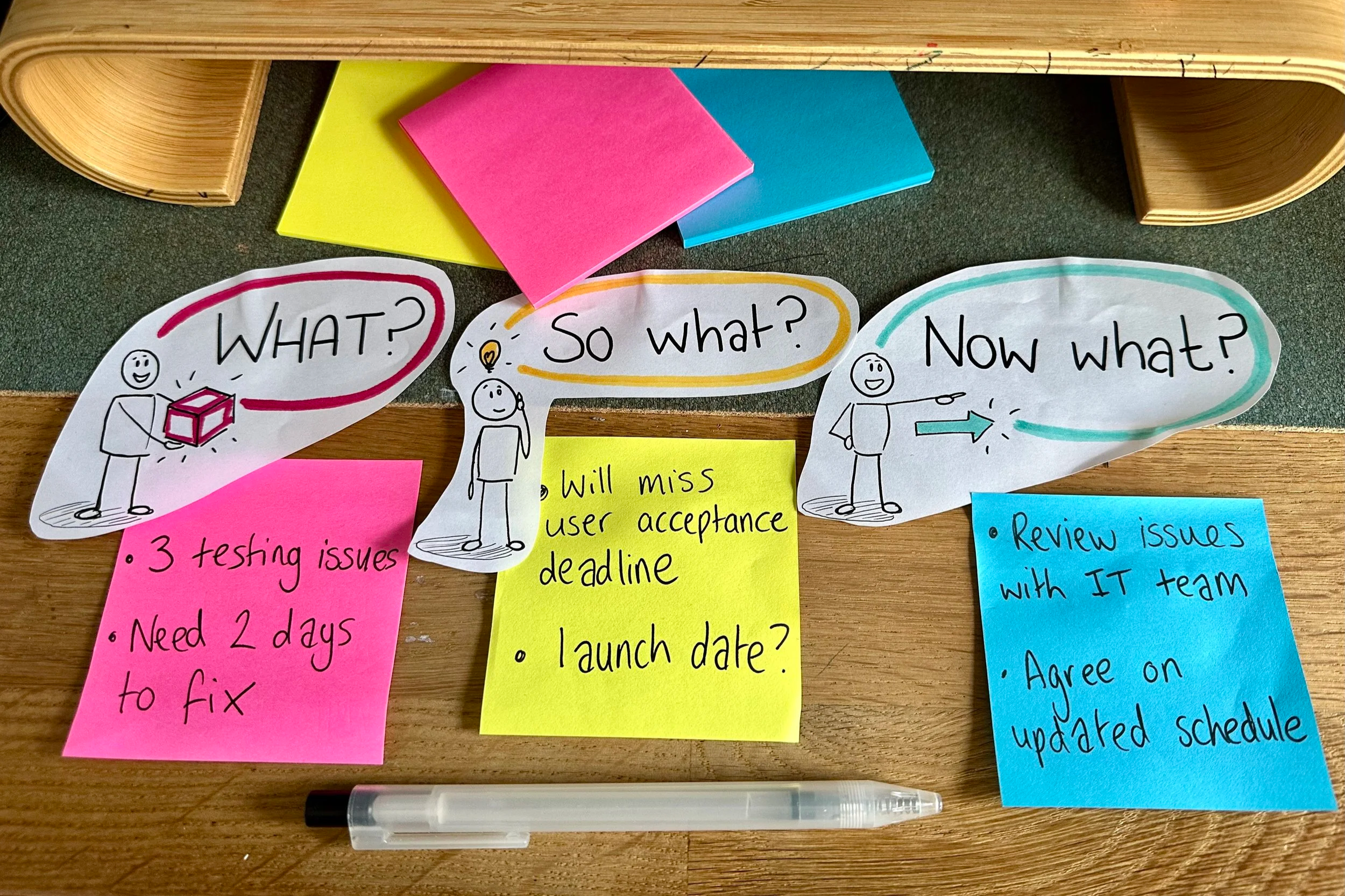
Idea: use coloured sticky notes for your key points in your next English meeting (You all know I love sticky notes!)
Give it a go
Think of something you'd like to explain at work: a project update, a problem you're trying to solve, an idea you'd like to propose or a decision you need to discuss.
Take a few minutes to answer these questions:
What? What's happening?
So what? Why does it matter?
Now what? What should happen next?
Then try explaining it aloud in English, using your notes as a guide.
The framework is a good starting point to help you decide what to say and what you want your audience to take away. It’s so versatile that it can be used in many different situations, so feel free to adapt it for your own context.
Would you like someone to help you practice this framework? Looking for a coach to help you make a stronger impact in English at work? I can support you through Business English training, language coaching and visual thinking. I help professionals find practical ways to organise their thoughts and express their ideas with greater clarity and confidence.

Hello,
I’m Jane Carvell, a business English trainer, language coach and visual thinking enthusiast. I help German-speaking professionals improve their English communication skills, so that they can build better connections in an international working world.